
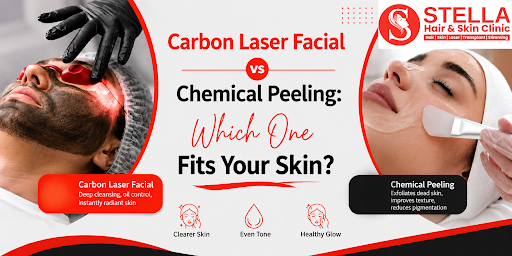
A carbon laser facial suits oily, acne-prone, or dull skin looking for an instant glow with no downtime, while a chemical peel suits skin dealing with deeper pigmentation, scarring, or texture issues. Both treatments work differently, and picking the wrong one for your skin type is usually why results feel disappointing. At Stella Clinic, we help you figure out which one actually fits before you commit to either.
If you’ve been searching for a laser carbon facial in Bhubaneswar and still aren’t sure it’s the right fit for your skin, this comparison should clear things up.
Table of Contents
- How Does a Carbon Laser Facial Actually Work on the Skin?
- How Does a Chemical Peel Work Differently From a Carbon Laser Facial?
- Which Skin Treatment Is Better for Acne-Prone or Oily Skin?
- Which Skin Treatment Option Involves Less Downtime or Recovery Time?
- Which Treatment Is Safer for Sensitive Skin Types?
How Does a Carbon Laser Facial Actually Work on the Skin?
A carbon laser facial uses a carbon liquid mask to absorb oil and impurities from the pores, and this is the exact process our experts at Stella Clinic follow on every carbon facial booked in. The mask is applied all over the face and allowed to sit. As the mask settles, it attracts dirt and excess oils. A laser then passes over the skin, breaking down the carbon along with everything it trapped underneath.
What’s left behind is skin that feels lighter, tighter, and noticeably brighter almost immediately, which is why many people describe this as a Hollywood carbon peel treatment.
How Does a Chemical Peel Work Differently From a Carbon Laser Facial?
A chemical peel works by dissolving dead skin cells layer by layer with acids, while a carbon laser facial lifts oil and debris off the surface; we at Stella Clinic offer both, so you don’t have to guess which process suits you. Glycolic, lactic, or salicylic acids sink into the skin and encourage new cell growth underneath, depending on the strength used. This one takes longer. Sometimes a few days, since the skin has to shed and renew on its own.
Which Skin Treatment Is Better for Acne-Prone or Oily Skin?
Carbon laser facials work better for oily or acne-prone skin. This deep pore-cleansing facial in Bhubaneswar pulls out excess oil and unclogs pores, so it’s a solid pick if breakouts or a shiny T-zone are a constant issue. Chemical peels help too, just not as fast. They’re better suited for fading old acne scars once the breakouts themselves have settled down. Our team at Stella Clinic can help you figure out which stage you’re at during a consultation.
Which Skin Treatment Option Involves Less Downtime or Recovery Time?
Skin brightening carbon facial wins out here, with almost no downtime, and at Stella Clinic, we often see clients book it on a lunch break for exactly that reason. Chemical peels need a few days of recovery, sometimes more, depending on how strong the peel is. Here’s what each one actually looks like afterwards:
- Carbon Laser Facial: Minimal redness, no peeling, safe to head straight back to work.
- Chemical Peel: Mild flaking or peeling for a few days, sun protection recommended.
- Carbon Laser Facial: The results are visible almost instantly.
- Chemical Peel: The results build gradually over repeated sessions.
If skin brightening is the main goal rather than treating deeper pigmentation, a carbon laser peel for glowing skin delivers that quick, event-ready result people ask for most.
Curious what a full carbon laser experience actually feels like from start to finish? Read on: Embracing Hollywood Glow With Carbon Laser Facial Treatment
Which Treatment Is Safer for Sensitive Skin Types?
Carbon laser facials are a safer pick for sensitive skin, mainly because no acids are involved to trigger a reaction. At Stella Clinic, sensitivity is one of the first things our team checks before any treatment is booked in. Chemical peels, especially stronger ones, can cause stinging or redness on skin that flares up easily, so a patch test or a proper consultation matters more before going that route.
- Fragrance or Acid Sensitive: Skin that is sensitive to fragrance or acid-based formulas generally requires gentler treatment options.
- Reactions to New Products: Sensitive skin often reacts to a new skin care product, and redness or stinging is often the first sign of a reaction.
- History of Skin Conditions: A history of rosacea, eczema, or easily irritated skin calls for extra caution before any acid-based peel.
Get the Treatment That’s Actually Right for Your Skin
Both treatments do their job well, just in different ways and different timelines. The right choice really comes down to what your skin is dealing with right now, not what worked for someone else.
Reach out to Stella Clinic to book your laser carbon facial or a peel session, and get your skin properly assessed as part of the process, so the treatment matches what your skin actually needs. The right advice at the start saves a lot of trial and error later.
Keep an eye out for the next blog, taking on another question people often get wrong about their skin.
Frequently Asked Questions
- Can you combine a carbon laser facial with a chemical peel?
Yes, but always space them out and get a professional opinion first.
- How many sessions will you need to see visible results?
Most people notice a difference after the very first session, though 4 to 6 sessions are usually recommended for longer-lasting results in pore size and brightness.
- Will your skin purge after either treatment?
Some initial breakouts are normal as your skin adjusts and clears out impurities.