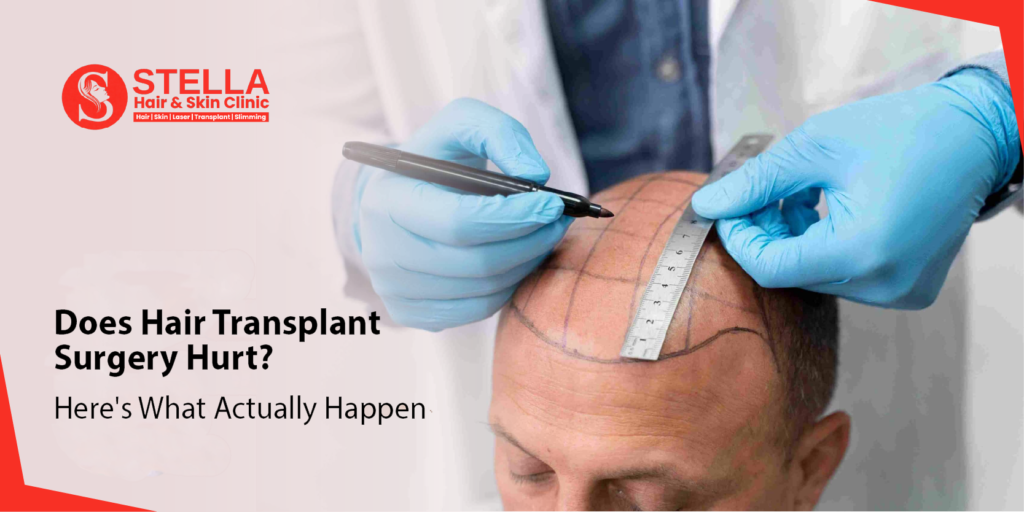
Most people who consider a hair transplant already know they want to do it. The research is done, the results look good, and the decision feels close. What keeps them from booking a consultation at a hair transplant clinic in Bhubaneswar is one quiet worry that doesn’t always make it into the search bar: Is it going to hurt?
It’s a fair question. The word “surgery” carries weight, and nobody wants to walk into something without knowing what they’re in for. The good news is that the reality is a lot gentler than most people expect. Here’s an honest look at what the experience actually feels like.
Table of Contents
- Does a Hair Transplant Actually Hurt or Is It Mostly Painless?
- Do They Use Anaesthesia for Hair Transplant Surgery, and Does It Fully Block the Pain?
- What Does the Procedure Feel Like During Surgery?
- How Painful Is the Recovery Period After Getting a Hair Transplant?
- What Does the Procedure Feel Like After Surgery?
- Which Is the Least Painful Hair Transplant Clinic in Bhubaneswar?
Does a Hair Transplant Actually Hurt or Is It Mostly Painless?
Here’s the truth: it’s far less painful than most people expect.
Think of it like a dental procedure. The anticipation in the waiting room is almost always worse than what actually happens in the chair. A hair transplant works on the surface layer of the scalp, just a few millimetres deep. There’s no cutting through muscle, no deep tissue work. Once the area is numbed, you simply don’t feel pain.
Do They Use Anaesthesia for Hair Transplant Surgery, and Does It Fully Block the Pain?
Yes, and it works surprisingly well.
Before the procedure begins, the surgeon numbs both the donor and recipient areas with local anaesthesia. The injections take about ten to twenty seconds per area. It’s a quick sting, then nothing.
Once the anaesthesia settles in, the scalp goes completely numb. The extractions happen, the placements happen, and you feel none of it. Some patients notice a faint sensation of pressure or movement, but that’s very different from pain. Your body is aware that something is happening, but it isn’t bothered by it.
Some clinics also offer needle-free anaesthesia, which uses pressurised air to deliver the numbing agent instead of a syringe. If needles are a concern, this option makes the start of the procedure a lot easier to sit through.
What Does the Procedure Feel Like During Surgery?
Honestly, quiet. The anaesthesia does its job, the surgeon does theirs, and you mostly just sit there. Most patients listen to music or watch something to pass the time. A few hours go by, and that’s genuinely about it.
The chosen technique will slightly shape the experience. The two most common are FUE (Follicular Unit Extraction) and FUT (Follicular Unit Transplantation):
- FUE: Individual follicles are removed one by one using a micro-punch tool smaller than a millimetre. Minimal trauma to the scalp. No stitches required. Recovery tends to be faster.
- FUT: It uses a strip of scalp from the donor area to harvest the follicles. The procedure stays painless, but those stitches tend to make the first week of recovery feel a little more uncomfortable than people expect.
You May Like: Glutathione Treatment in Bhubaneswar: Brighten and Lighten Your Skin at Stella Hair and Skin Clinic
How Painful Is the Recovery Period After Getting a Hair Transplant?
The first couple of days involve some soreness. Most people describe it as a tightness across the scalp or as something similar to a mild sunburn. Noticeable, not distressing.
Here’s what the first week looks like:
- Days 1 to 2: The scalp feels tender and slightly swollen, especially around the forehead. Sleeping with your head elevated helps reduce this. Most people manage fine with standard pain relievers like paracetamol or ibuprofen.
- Days 3 to 5: The soreness eases up. Some itching starts, which just means the scalp is healing. The temptation to scratch is real, but it’s important to resist it.
- Days 7 to 10: Small scabs form around the transplanted follicles and begin to shed naturally. The scalp starts to look and feel more normal.
What Does the Procedure Feel Like After Surgery?
The anaesthesia wears off by evening. What comes back is mild, mostly tightness, sometimes a slight heaviness across the scalp. Forehead swelling is common for a day or two. It looks worse than it is, and it fades. Here are a few things worth knowing about the weeks ahead:
- Shock loss: Around two to four weeks after the procedure, the transplanted hairs will shed. This is completely normal. The follicles are still intact beneath the skin, and new hair begins to grow from them. Most patients aren’t warned about this and panic unnecessarily.
- New growth: Hair starts appearing around three to four months. It starts fine, then thickens over time. Full results are visible closer to the twelve-month mark.
- Patience is part of the process: Hair transplantation in Bhubaneswar has grown in popularity over recent years, and one of the most common reasons people feel anxious post-procedure is the waiting period. Knowing this upfront makes it easier to manage.
Which Is the Least Painful Hair Transplant Clinic in Bhubaneswar?
How comfortable the experience is depends largely on the technique used and the surgeon performing it. When looking for a hair transplant clinic in Bhubaneswar, these are worth asking during the consultation:
- What anaesthesia method do they use, and do they offer needle-free options?
- How do they manage discomfort during recovery?
- What does their aftercare support look like in the first week?
At Stella Clinic, no one goes in without knowing what to expect. If pain has been the thing keeping you from making a decision, a conversation with the team will help. Book your session and find out what the process looks like for you specifically.
The Bottom Line
Pain keeps a lot of people from a decision they’ve already made. That’s understandable. It’s just not usually as bad as the build-up suggests. Once the anaesthesia does its job, the experience is far gentler than most people expect. Recovery is mild. The right hair transplant clinic in Bhubaneswar will walk you through everything before you commit to anything. Stella Clinic does exactly that. Contact us to book your session and see for yourself.
Frequently Asked Questions
- How long does the pain last after a hair transplant?
Some mild soreness is completely normal in the first couple of days. Most patients feel like themselves again within a week. The tenderness in the donor and recipient areas fades gradually as your scalp heals, and it’s all part of the process.
- Can I take painkillers after the procedure?
Absolutely. Your surgeon will prescribe mild pain relievers such as ibuprofen or paracetamol to help keep discomfort and swelling in check. Just stick to the recommended dosage, and you’ll be fine.
- Will I feel pain during the surgery?
Not at all. Local anaesthesia is used throughout the procedure so that you won’t feel any pain. You might notice a slight pressure or tugging sensation at times, but nothing uncomfortable. Most patients are actually surprised by how smooth the experience is.